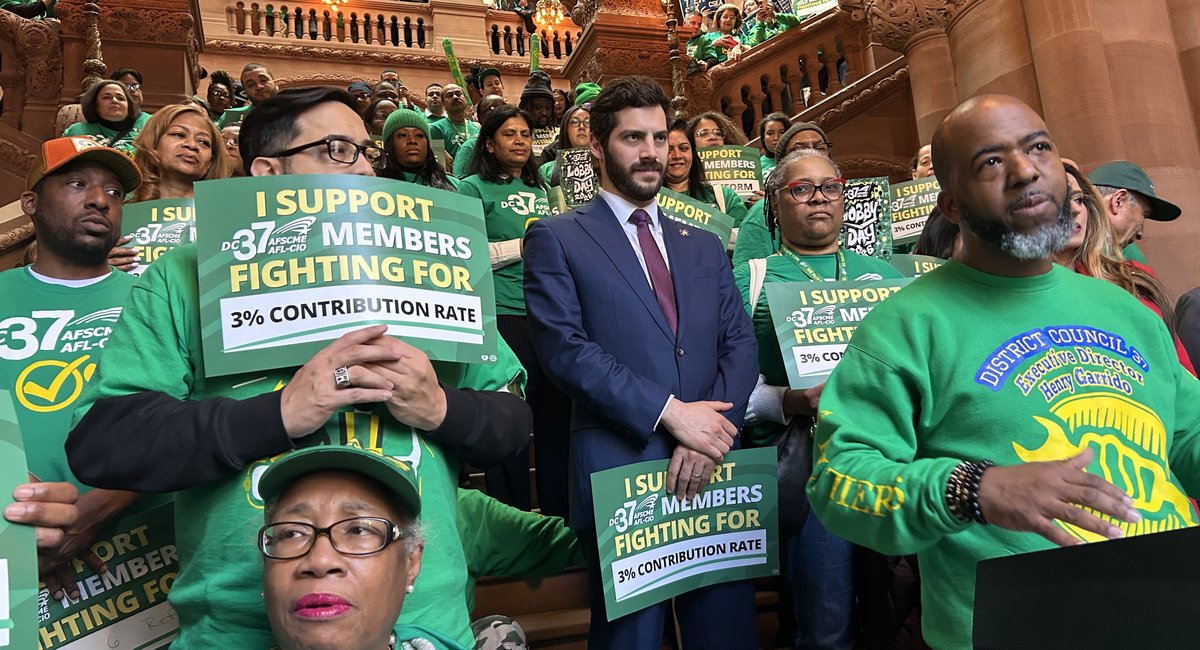
A union plan to improve retirement benefits for newly hired public workers would cost taxpayers about $1.5 billion a year, according to people briefed on the proposal.
The union’s plan to change the Tier VI pension law is the beginning of making changes as part of the state’s $263 billion budget, officials said. The proposal was presented to Gov. Kathy Hochul and senior representatives of the government as they go through the budget period of April 1, according to three people who were informed of the proposal but were not authorized to speak publicly.
The first proposal could cost New York state $242 million more than the $3.4 billion it will spend next year on pensions, according to people briefed on it. New York City’s pension costs would increase by $328 million. School districts in the rest of the state will pay $480 million, and local governments will pay $407 million, the people said.
Newsday first reported on the new proposal and potential cost.
Supporters of the Tier VI reform say the 2012 pension law made it harder to keep state workers, including teachers, clerks and uniformed workers. Under Tier VI, people employed after April 1, 2012 must work until age 63 to retire with full benefits and must contribute between 3% and 6% of their earnings toward their pension costs.
“I think this is an important investment in the future so that we can protect workers and people can live with the dignity they deserve” when they retire, said Sen. Jessica Ramos, Queens Democrat.
But opponents question whether the pensions are related to the labor shortage. They also blanch at a constant cost. Public sector retirement benefits are funded by investment funds and government employers, who ultimately collect revenue from taxpayers.
“This will raise property taxes in the cities and will have a big impact on Mayor Mamdani’s budget,” said Ken Girardin, a member of the conservative Manhattan Institute. “This is not an investment – it’s a gift.”
The union proposal would allow people in the Tier VI pension program to retire at age 55 if they have worked in the public sector for 30 years, the people said. This was a matter of great concern to teachers and is in line with the rules applied to civil servants employed before 2012.
The proposal will reduce the amount that workers must contribute to their pensions by up to 5% based on income. Uniformed personnel outside of New York City will be able to count additional pension benefits.
Gothamist reported this week that New York State AFL-CIO President Mario Cilento has been working to forge an agreement among various civil society organizations and to discuss his plan with State Treasurer Blake Washington, who is Hochul’s top financial backer.
A spokesman for Cilento declined to comment. Washington told reporters on Wednesday that it was looking at the proposal and “assessing what we can do.”
“The implication of this Tier VI debate is, how do we keep talented people in the workforce?” He said. But on the contrary, we have to make sure that we can afford it, and not just us, the state of New York, but local governments as well.
Unions representing local government officials issued a statement this week saying the state needs to cover additional costs associated with the law. Washington said that was impossible.
New York Mayor Zohran Mamdani said last week that he supports the Tier VI reform and said the new tax revenue would ease its budget impact.
“There needs to be changes to Tier VI because we need to make it as easy as possible for New Yorkers to enter a life of public service,” he said.
New York State Association of Counties Executive Director Stephen Acquario said he is looking for more information on the proposed impact on county budgets. Part of that has to do with state pension fund investments.
“Information is how we govern and budget, and now we have two new changes: budgets and these reforms that are being discussed,” said Acquario. “We will have to do an analysis and see what the impact is on our revenue percentage.”
Includes a report from Jon Campbell.
#Yorks #pension #sweeteners #cost #billion #year